
Towards a New Performance Culture: A Guide to a Motivating Performance Culture in Organizations
Performance culture does not arise through appeals, but from within: from identity, purpose, and role models. What makes a meaningful performance culture, how it specifically works, and how you can build it in 5 steps.
Performance culture is the behavior of all people in an organization and all processes that influence people's motivation. Performance itself arises from internal drive, through ability and resilience.
Performance culture is not performance pressure: it combines joy and excellence.
Companies gain motivation, retention of high performers, and a strong employer brand.
Employees and managers gain meaning, self-efficacy, and a desire for performance.
It is created in three steps – from identity to everyday life.
It is particularly important across multiple locations, after mergers, during generational changes, and amidst skilled labor shortages.
1. What is a performance culture in organizations?
Performance culture answers three questions: What do we mean by performance? According to which principles and for what purpose do we want to perform? And how do we recognize and appreciate it?
Performance is more than work divided by time, as physics defines it. And it is more than the mere result. The best cultures evaluate not only the result but the overall performance. This is significantly determined by development and includes the path to the result. If the performance is right, the result will be right sooner or later.
We need a new understanding of performance between the extremes: between "performance at any price" and "performance as a hostile term," between the 70-hour week and the hammock. We call it meaningful performance.
Distinction is also important: Performance pressure comes from the outside – through key figures, control, and fear of mistakes. Performance culture comes from within – from the desire to do something significant well. Performance pressure often produces work to rule, whereas the will to perform generates the extra mile.
How performance pays off – and why it feels good: the feeling of creative happiness.
More about Keynote Speaker Christopher Spall: christopherspall.com/speaker

2. What are the benefits of an effective performance culture?
A) For companies
Motivation instead of a downward spiral: No more declining motivation, work to rule, and resigned high performers.
Better Performance: A greater will to perform generates better results.
Retention of high performers: Good people want to work where performance is enjoyable. A shared attitude towards performance also strengthens the sense of togetherness among employees. More on this in the article Strong Employer Brand.
A shared compass: Performance is lived according to the same principles throughout the company. Especially across multiple locations, a shared understanding of performance connects – as with the Eifel Mosel Group: More than ten branches. One shared understanding of performance.
B) For employees and managers
Desire instead of fear: Those who experience performance as an opportunity grow. Those who experience it as a threat play it safe – see When the fear of losing is greater than the desire to win.
Meaning and self-efficacy: People perform when they see an overarching purpose and can contribute their personal motivation.
Leadership as a role model: Managers become ambassadors of the culture – like Vincent Kompany as a DNA ambassador.
If we tap into the inner fire of every individual and lead the way ourselves as performance role models, the will to perform grows within the company.
3. How is an effective performance culture created? A guide in 3 steps
Culture is not made on a mission statement poster, but in the engagement with people. The following steps stem from over 200 projects in 15 years – detailed in the article Performance culture does not arise through appeals.
Focus on what can be influenced: Many people believe performance is no longer contemporary and that a performance culture is fundamentally unchangeable. They base this belief on today's upbringing, demographic change, and the zeitgeist of our affluent society. These factors are indeed difficult to influence. However, we can very much influence how we define and anchor performance culture in our organization, how we use individual motivation, remove motivation barriers, and use motivation boosters. Our approach for more performance with meaning works specifically on these performance levers.
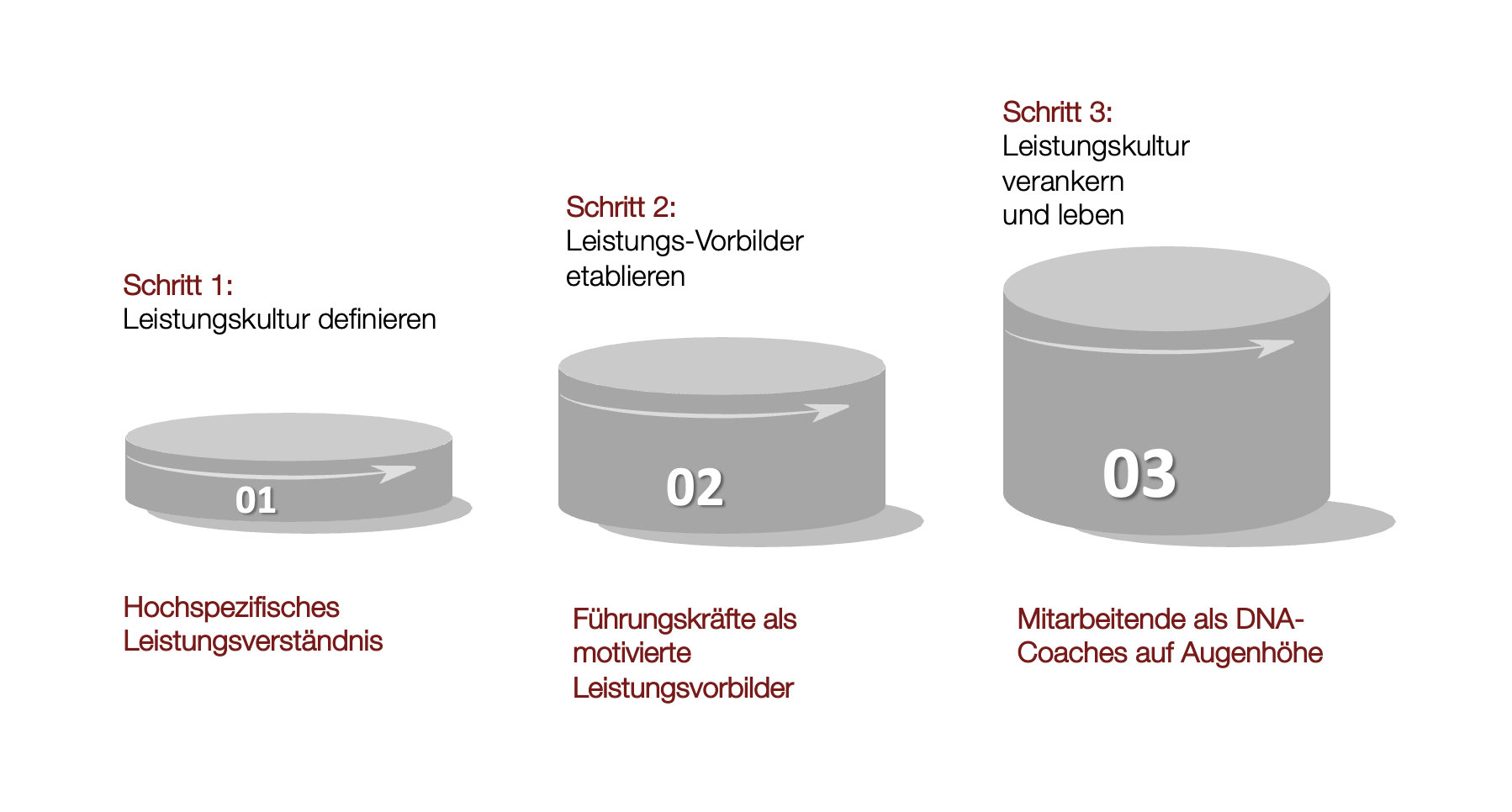
Step 1: Define performance culture
The goal is a highly specific understanding of performance: What does good performance mean for us – specifically, in our language? The starting point is the identity of the organization and an honest assessment of the current state. Important: Involve employees from the very beginning.
Step 2: Establish performance role models
Managers become motivated performance role models. The attitude and behavior of the company's top management are just as important as all internal employer branding measures combined.
Step 3: Anchor and live performance culture
Employees become DNA coaches at eye level. Performance culture is made in everyday life – through feedback, appreciation, and rituals.
This path is presented in detail and vividly in the inspirational lecture "Towards a new meaningful performance culture".
Effective and lasting motivation only comes from within.
Performance culture is made in everyday life.
The willingness to perform is significantly influenced by direct supervisors.
People want to perform when they see an overarching purpose and align their identity with the bigger picture.
The attitude and behavior of top management are just as important as all internal employer branding measures combined.
If you want to live a performance culture permanently, you need role models at eye level.
Employee engagement should be just as measurable as sales figures.
What is rewarded in your company: result or performance?
Where do you lose energy due to motivational barriers?
Does your performance culture depend on a few individuals or is it broadly anchored?
Pink (2010): Lasting motivation occurs when the activity itself is perceived as a reward.
Doshi & McGregor (2015): The highest motivation arises when people experience their work as playful, meaningful, and personally rewarding.
Reiss (2000): Motives drive our daily actions. Their combination and ranking make us unique.
Deci & Ryan (1993): People develop their motivation most sustainably when they decide for themselves, experience themselves as competent, and feel socially integrated.
More on this in 6 uncomfortable truths about building a performance culture.
Performance in the Age of AI: Impact instead of Presence
Artificial Intelligence is changing a logic we have become accustomed to for decades: performance and time are no longer necessarily linked. If a task that previously required a working day is completed in one hour with AI, the time spent says less and less about the actual performance. This confirms what we mean by performance: it is more than work divided by time.
In an AI-driven work world, the number of hours worked is no longer performance. Only the impact counts.
Christopher Spall, performance visionary and Managing Director of Spall Identity
Companies therefore need clear target visions: What should actually be different or better if we are successful? Teams should report less on what they did and more on what they achieved.
4. For which organizations is a performance culture particularly helpful?
Companies that are not yet exhausting their performance potential
Companies experiencing work to rule
Companies with many locations that need a shared understanding of performance.
Organizations in mergers where different cultures are growing together.
Family businesses in generational transitions that need to re-translate the founders' performance concept.
Companies facing skilled labor shortages that want to retain and attract high performers.
Organizations after a crisis where motivation and trust have suffered.
Is performance still contemporary today? What the data shows
Yes – if we rethink performance. Three studies disprove common prejudices:
Gen Z bashing fails.
4 out of 5
of 16- to 18-year-olds are willing to perform well if they see meaning in their work.
Source: YouGov 2023
Lack of willingness to perform is not a problem of the young.
10%
Only one in ten baby boomers wants to work voluntarily until the statutory retirement age.
Source: Hasselhorn et al. 2019
Lack of willingness to perform due to being overwhelmed is statistically a myth.
42 %
42% of employees feel underchallenged, only 18% feel overwhelmed.
Source: AVANTGARDE 2022
Conclusion: Lack of willingness to perform is neither a problem of the young nor one of being overwhelmed – but often one of a lack of purpose.
For further listening and reading
Podcast "New Performance Culture in Organizations" together with Olympic champion Magdalena Neuner

A 70-hour week is just as undesirable as effortless prosperity is unsustainable in the long run. Between these extremes lies the healthy middle ground, characterized by a shared understanding of performance.
In the podcast "Over a Coffee with…", Christopher Spall – together with double Olympic champion and 12-time biathlon world champion Magdalena Neuner – explains how organizations can find this path.
“We want to encourage organizations to seek their own individual understanding of performance.” – Christopher Spall
The book "Peak Performer"
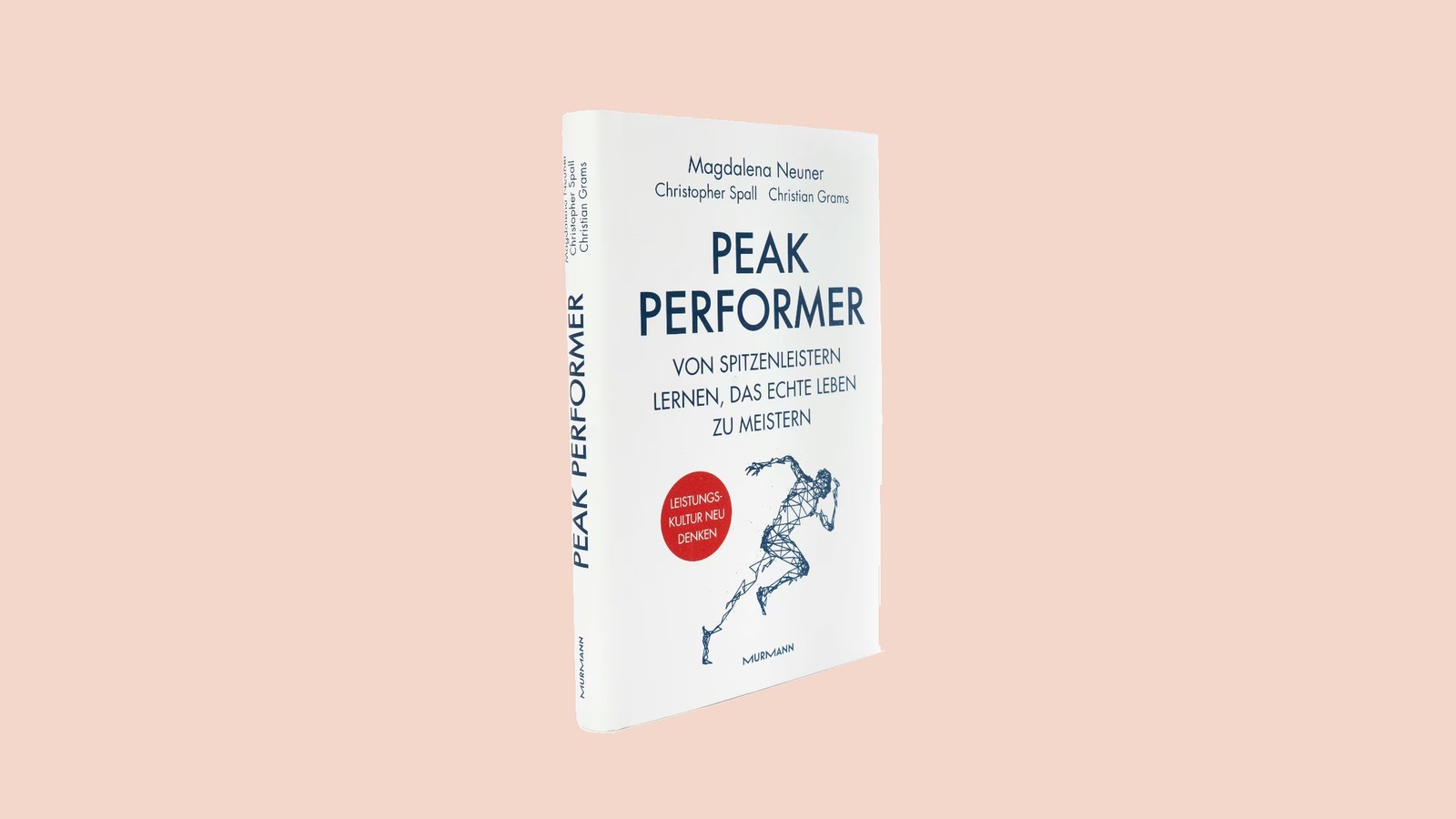
Learning from top performers to master real life. The first inspiration book for a meaningful performance culture – by Magdalena Neuner, Christopher Spall, and Christian Grams (Murmann 2023).
"Peak Performer" shows the way to peak performance through personal, previously unpublished stories from top performers like Olympic champion Matthias Steiner, extreme athlete Ania Blacha, GlobeAir CEO Bernhard Fragner, or footballers Sven and Lars Bender.
The 7 Cornerstones of a New, Meaningful Performance Culture
Acting according to the motto "No pain, no gain"
Leaving one's own comfort zone and wanting to improve again and again
Being fully focused and present
Wanting to progress through one's own drive
Understanding defeats as places of learning
Consciously dealing with performance limits
Understanding performance as part of a larger whole
Source: based on "Peak Performer – The Book", M. Neuner, C. Spall, C. Grams, Murmann 2023.
More about the book » · Buy on Amazon »
5. Further Questions
How do I deal with employees who simply don't want to?
Yes, not everyone will join in. And at the same time, more people will be inspired by the performance culture if they know their "why." For this, more than mere goals are needed. It requires the company's willingness to tap into people's inner fire.
What percentage of employees should identify with the performance culture for it to be effective long-term?
From 200 practical projects, we know that a share of 50% of employees who are open to the agreed performance culture is already sufficient to positively influence the entire organization. The good news is that not everyone has to join in to take the performance culture to a higher level. And with every employee who gives their best with joy with the help of the agreed performance principles, the implicit pressure on all resistors increases.
How do you measure performance culture?
Employee engagement should be just as measurable as sales figures. Regular surveys on motivation, meaning, and identification make it visible whether the culture is arriving in everyday life.
What role do managers play?
The decisive one. Managers shape what counts as performance and how it is appreciated through their example. Without them, every mission statement remains just paper.
Can you "introduce" a performance culture?
No. You cannot decree it, but you can develop it systematically – together with the people who are to live it.
How does AI change the evaluation of performance?
When technology takes over or accelerates work steps, working time loses importance as a yardstick. What becomes decisive is the contribution work makes to the shared result. This requires new target visions and will also change remuneration and incentive systems in the long run.
How long does the setup take?
Building a performance culture in organizations depends on the size of the company and the current status quo of the culture. Culture is made by people. Targeted work with managers and employees to develop and anchor the culture is crucial. To get clarity on where the culture stands on the way to an effective performance culture and what the biggest levers for development are, the compact practical seminar "Desire for Performance" is a sensible first step.
What does performance culture have to do with identity?
Performance culture builds on the essential strengths of the company and the inner fire of all people who commit to the common cause. Shared identity and decoding the personal identity of managers and employees is the breeding ground for performance. Because those who know what they and their company stand for perform out of conviction. More on this in the article What is brand identity?.
What can companies learn from professional sports?
Peak performance arises from joy in the task, clear values, and a team that challenges each other. More on this in The seven principles for achieving peak performance.
Learn more: Podcast and Interviews
The Next Step
In the practical seminar “Desire for Performance”, we work with your managers on your performance culture. You can find an overview of our approach on the Performance Culture page.
For a compact introduction to the topic, we also recommend the inspirational lecture “Towards a new meaningful performance culture”.