Strong Employer Brand: How to increase your attractiveness as an employer

The employer brand shows potential employees why it's worth coming on board - and top performers why it's worth staying. Anyone who knows what their own organization stands for as an employer can align the entire applicant and employee experience with it – and thus appear convincingly from a single source.
The topic of employer branding has never been as relevant as it is today. While there were plenty of applicants for every position after the years around the highest birth rate in 1964, for example, today only a few companies with high appeal as employers have this luxury. These days, employees no longer apply to companies, but companies apply to employees. The employer brand is the answer to the question of how we can meet this challenge.
The employer brand shows potential employees why it is worth coming on board - and top performers why it is worth staying.
What does employer brand mean?
The employer brand represents the identity of a company as an employer. It encompasses all aspects that characterize the company as an attractive workplace – from the corporate culture and working conditions to employee development.
In other words: the employer brand shows potential employees why it is worth coming on board - and top performers why it is worth staying.
Anyone who knows what their own organization stands for as an employer can align the entire applicant and employee experience with it - and thus appear convincingly from a single source.
Employer branding is the strategic orientation and positioning of the company in the labor market.
A common misconception: the goal of a strong employer brand is not to attract applicants en masse. Rather, it is about attracting suitable applicants. Those who identify with the corporate culture and develop into top performers. Who wants to read dozens of unsuitable applications and invite many candidates to interviews who hardly fit the corporate culture? The motto: Better one suitable applicant than one hundred unsuitable ones.
It is also not about bringing fluctuation in the company to zero. Apart from the fact that even the most attractive employers are not immune to turnover, new people also bring new ideas and perspectives into the company. A company with particularly low turnover sometimes runs the risk of becoming operationally blind. Generally speaking, a turnover of more than 15% is considered a real problem.
Values must not only be in the job advertisement or the product brochure, but must be truthfully lived in everyday life.
How a unifying DNA is created across continents
Brands are made by people and can be communicated most effectively in person. Our client hep, a solar specialist from Baden-Württemberg, has branches in the USA, Canada, and Japan. In addition, hep has grown strongly in the last five years – by over 500% to 120 employees in Germany alone. We developed the hep DNA and anchored it as a unifying core in all branches on three continents.
Employer Brand vs. Corporate Brand
What is the decisive difference to the company brand or the corporate brand?
Simply put: the corporate brand focuses on customers, the employer brand on potential and existing employees. After all, what is highly attractive to a customer can be irrelevant – or even negative – to an applicant. An example: Your company promises customers that it will always be available? Very few applicants are likely to find that attractive.
So if you are clearly positioned as a corporate brand, it's time to take care of building your employer brand. The good news: if you have already defined core values for your brand and anchored them in the company, these may also apply and be applicable to the employer brand. In both cases, the first priority is credibility. The values must not only be in the job advertisement or the product brochure, but must be truthfully lived in everyday life. A phantom world collapses at the latest in the first few days of a new employee.
The Importance of the Employer Brand for SMEs: Increasing Employer Attractiveness
The employer brand – also known as employer brand – plays a central role for companies in the competition for specialists and talent. A strong employer brand is crucial for success in order to increase employer attractiveness and thus attract and retain highly qualified employees in the long term. Thus, the topic is one of the central success factors for companies of all sizes today.
Particularly for small and medium-sized enterprises (SMEs), which can usually pay less competitive wages than large corporations, it is worth taking a look inside: What distinguishes us as an employer and how do we want to position ourselves in the labor market in the long term? Anyone who knows the well-founded answers to these questions has the tools to build a strong employer brand. This is because a clear profile increases employee loyalty and top performers stay loyal to the company longer – thus increasing productivity. And applicants can more easily assess whether an employer is a good fit for them.
And not to forget: fluctuation is annoying and often emotional, but also a frequently underestimated cost factor: the costs per turnover case amount to between 90 and 200 percent of the annual salary (gross) of the departing employees. High turnover therefore not only brings unrest into the company, overburdens the remaining colleagues, and "costs" knowledge, but can also literally be very expensive.
Also with regard to the much-discussed Generation Z, it can be observed: young people change jobs more frequently and can thus drive turnover upwards. The figures show: according to a recent Forsa study, every second Gen Z is willing to change jobs. Every third person states that they only want to stay with the same employer for a maximum of two years. This may be a major problem for companies with a weak employer identity. For clearly positioned companies, however, it also offers a great opportunity to attract and retain suitable Gen Z applicants. What is important to Gen Z? According to their own statements, not only job security and a higher salary (74%), but also good leadership behavior (65%) and flexible working hours (59%).
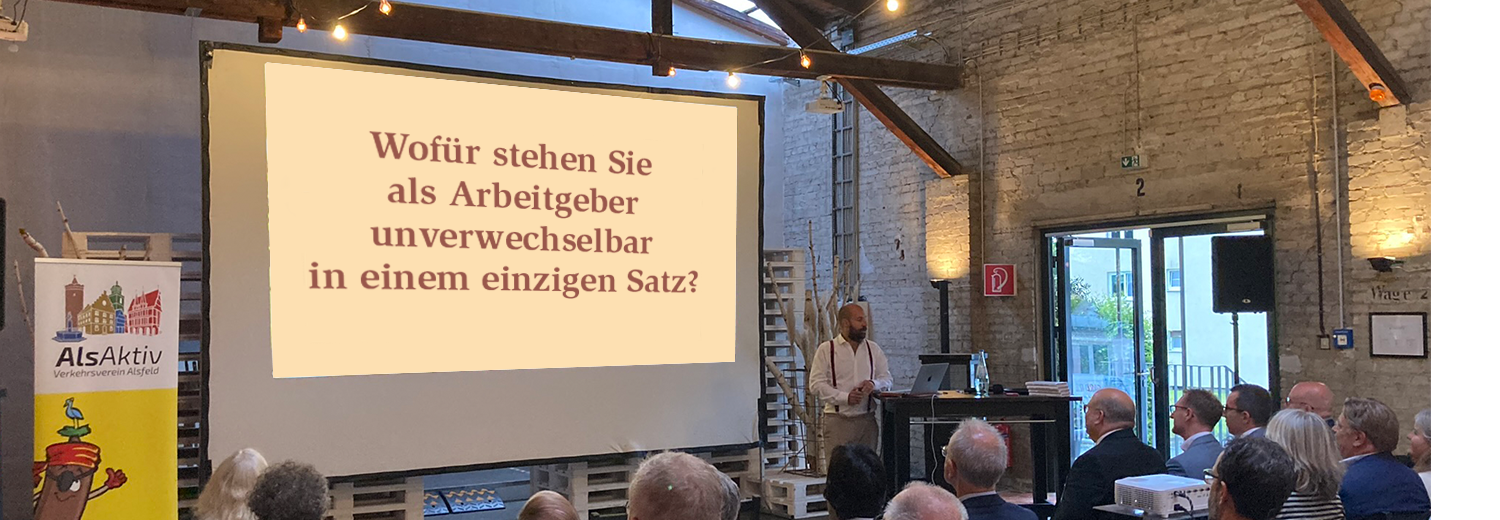
Presentation "Employer Attractiveness" at the Alsfeld Entrepreneurs' Day
Guest speaker Christopher Spall spoke at the event in front of around 100 participants in the old Alsfeld freight station about the benefits employer branding can have for companies. He gave small and medium-sized entrepreneurs practical tips on how they can increase their attractiveness as employers.
What role does the CEO play?
Speaking of managers: today, social platforms like LinkedIn are important building blocks of employer identity. Many companies therefore maintain a professional presence in order to increase employer attractiveness. One thing is often forgotten: the CEO or the managing director plays a central role with his personally branded Personal Brand (The CEO Reputation Premium):
Half of the corporate reputation is due to the CEO's reputation.
No other person can influence the reputation of an organization as much as the person at the top – for better or worse. Many organizations waste a lot of potential here. Either out of fear of the CEO's missteps or simply because they set priorities differently. But put yourself in the position of a potential applicant: in contrast to a large corporation, many managing directors in SMEs are present and tangible for the employees – and thus have a great influence on the atmosphere and the corporate culture. You can find out here how managing directors become brands and thus contribute specifically to the profiling of their organization as an attractive employer brand.
CEO Branding

In my everyday life, I use my developed brand in many job interviews - whether with customers or new employees.
What role do managers play?
The CEO isn't the only one who can make a valuable contribution to employer attractiveness. Managers are crucial when it comes to anchoring the developed employer brand in the company. If they can credibly and effectively communicate the employer identity in moments of truth - towards applicants and towards employees - it begins to work.
The most important points of contact are not only job interviews and annual employee reviews, but the many moments in everyday life where the employer brand can be made palpable. To ensure that managers can use the employer brand confidently, a training program with situational training is recommended. Important: If managers live the employer identity differently, uncertainty arises among employees. A clear profile as an employer will fail to materialize.
How has the relevance of the employer brand changed in recent years?
In recent decades, the concept of the employer brand has evolved into a decisive factor in the world of corporate management. In the past, the working world was mainly focused on the tasks that employees perform in a company. However, over time, this focus has shifted. Employers increasingly recognized the importance of not just employing workers, but also attracting talents and retaining them in the long term.
The labor market has evolved into a competition for the best minds, and companies today more than ever have to invest in their employer brand to stand out in the battle for talent. Through home office and remote positions, companies suddenly no longer just compete with companies from their own region, but sometimes even with companies from all over the world. With the advent of social media and an increasingly transparent corporate culture via platforms like Kununu, potential employees can more easily gain insights into the way a company works and its reputation. Therefore, a strong employer brand is not only a tool for attracting top talent, but also a shield against negative perceptions and a driving force for employee retention and motivation. In today's highly competitive business world, cultivating a positive employer brand is therefore crucial to building long-term success and a strong corporate and performance culture.
Why is the employer brand crucial for SMEs today?
The order books are full, but people are missing. The headhunter can't find anyone suitable either. Particularly in SMEs, qualified employees are often a bottleneck. Maybe there's a large corporation around the corner that can pay particularly high salaries? Furthermore, according to studies, the average tenure in large companies with more than 2,000 employees is almost five years higher.
This is where the employer brand comes into play: By specifically strengthening your employer attractiveness, you can specifically attract top talent and at the same time increase the retention of your existing employees. A strong employer identity can lower your recruitment costs, increase employee satisfaction, and reduce turnover. Having the right expectations is crucial here.
To remember: a strong employer brand should not attract more applicants – but the right ones. Those who can identify with the employer identity.
One of our clients, which has a whole truckload of corporations on its doorstep, is the SME EIZO Technologies. You can find out here how the SME south of Munich defined its employer identity.
The development of the EIZO Technologies employer brand
EIZO Technologies is no. 1 for non-standard visualization solutions. However, the world market leader for Air Traffic Control competes at its site in Geretsried, south of Munich, with countless other companies, many of them well-known corporations, for specialists. We significantly increased the attractiveness of the SME as an employer.
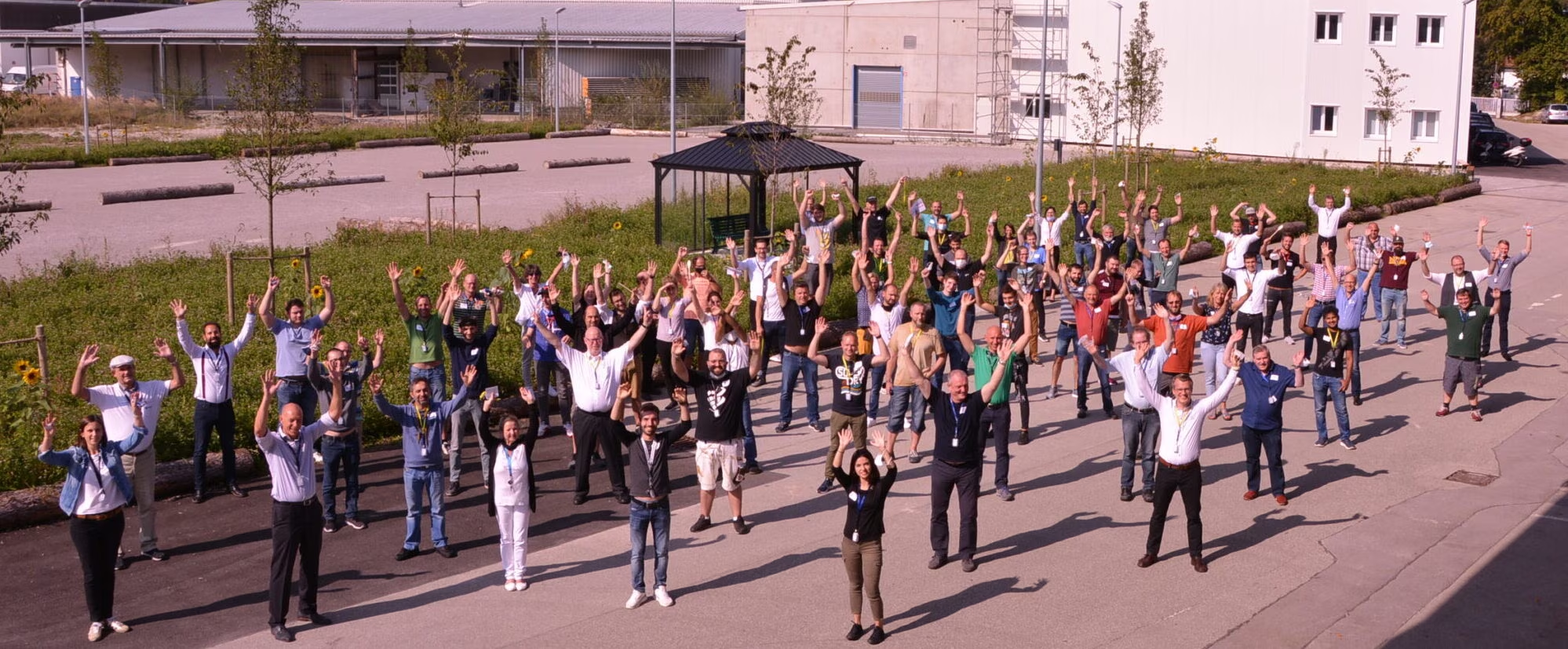
What really attracts talent?
Many think that only a high salary attracts talent and retains it in the long term. However, studies such as Candidate Experience show that factors such as a lived corporate culture and strong values – i.e. an anchored DNA – have a similar influence on the decision to apply. This is good news, especially for SMEs that cannot afford large corporate salaries. The lived and tangible corporate culture not only ensures more suitable applicants, but also a longer stay in the company. So invest in your corporate culture rather than a multitude of benefits that make no real difference.
How do I increase employer attractiveness?
You want to build your employer brand. But where should you start? The first step is an honest look inside. Identify where your strengths and weaknesses as an employer lie. We recommend a comprehensive interview series with employees for this. It can also be helpful to talk to recently hired employees. Don't just scratch the surface in your analysis, but follow up. This is the only way to find out what employees and applicants really value about you – and where you have some catching up to do.
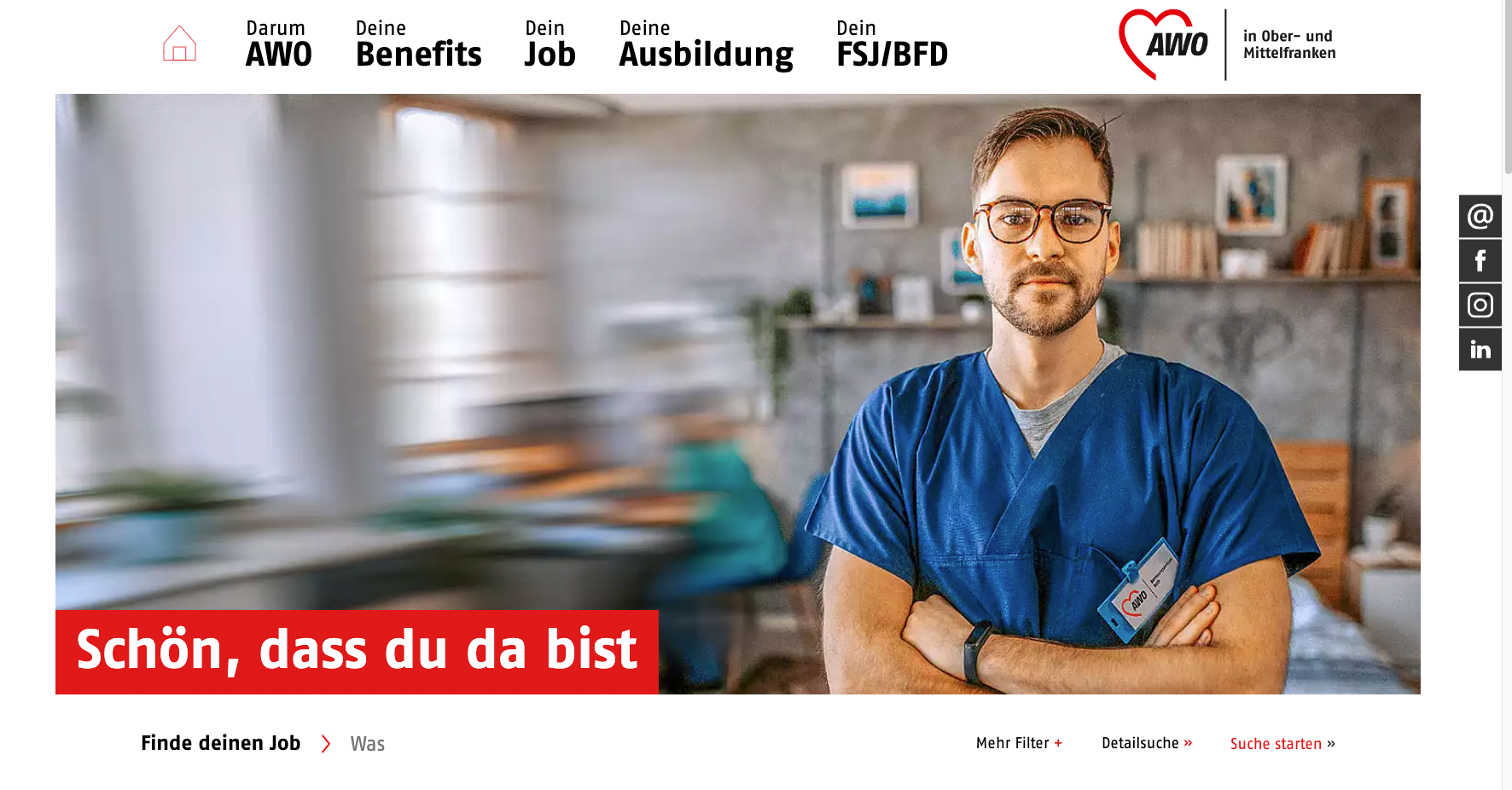
Based on your strengths and weaknesses, you can begin to specifically build your employer brand to increase employer attractiveness. Don't just look at the application process. The goal of a strong employer brand is to make your employer identity tangible everywhere at every employer touchpoint. To this end, we recommend gathering and prioritizing these touchpoints together with a cross-departmental "Employer Brand Team". If you want to see what such an optimized touchpoint that makes the employer identity tangible can look like, then check out the AWO career site in Upper and Middle Franconia, which we designed.
The AWO's path in Upper and Middle Franconia to a strong employer brand
The path to a strong employer brand can only be successful with a strong, shared identity. For this reason, the development process with AWO focused on working out the unifying DNA of the 16 district associations and the regional association – and then making it tangible across the board.
How do I measure the strength of the employer brand?
We recommend regular measurements of your attractiveness as a brand – for customers as well as for applicants and employees. A sensible rhythm for such surveys is once every one to two years. This ensures that your measures are effective and that you can countersteer if necessary. Useful measurement criteria for the attractiveness of your employer brand are, in addition to turnover:
The referral rate as an employer
Employees' identification with the brand
The assessment of employee leadership in the company
The perception of internal communication
These metrics can be tracked over time and provide a good insight into how your organization is developing as an employer. We also recommend asking openly for feedback in these anonymous surveys. In this way, you can identify the most important construction sites on the way to becoming an attractive employer. Be sure to share your conclusions from the surveys with your employees. This conveys the feeling that the surveys are valuable and that it is worth participating as an employee.
Success examples:
These mid-sized brands have become strong employers
We don't want to blow our own horn. That is why here are three examples of SMEs we have not worked with on their employer brand - but who, in our view, are doing a good job:
baramundi is a medium-sized software manufacturer from Augsburg. True to the motto "Working time is lifetime", the employer does everything it can to make working time as pleasant as possible for its employees. Whether it's subsidies for childcare, a mail service for employees, or sabbaticals. The Augsburgers also show many facets of their corporate culture and visualize their benefits clearly and understandably. In addition, the interested party already learns something about the leadership culture on the website. And because the package seems to be right, baramundi achieves a strong recommendation rate of 94% on Kununu. Keep it up!
An almost equally high referral rate on Kununu is achieved by Cofinpro with 90%. The management, professional, and technology consultancy from Frankfurt attaches great importance to the further development of its employees. And we can confirm this first-hand. Since 2016, we have accompanied 96 employees in our personal branding format for companies on their way to becoming a strong personality brand. The training opportunities, many attractive benefits, and an appreciative corporate culture ensure that Cofinpro has been repeatedly recognized as a "Great Place to Work".
From personnel development to personality development: Cofinpro AG
Personal branding is an essential factor at Cofinpro AG so that consultants can use their individuality. Christopher Spall interviewed the board member Christine Martin. The business graduate is a co-founder of Cofinpro AG, with its headquarters in Frankfurt am Main. Christine Martin has been on the Executive Board since 2013, where she is responsible for the corporate and personnel strategy, among other things, as well as the company's central divisions.

From the craft sector, we are impressed by the family business Wurst Stahlbau from Lower Saxony. The career site offers an exceptional digital applicant experience. The application process is clearly structured, and apprentices and job seekers receive many valuable tips in a very clear manner. This transparency allows interested parties to get a precise picture of the employer in advance. The video "The 1st working day" and the "Application guide for apprentices" are outstanding special features and the true "extra sausage" (special treatment) that the company offers its applicants. Communication is very appreciative throughout. 80% of evaluators on Kununu have found their home at Wurst Stahlbau - in line with the motto "We offer perspective. Find your professional home" – and would also recommend the company.
What can I tackle now?
4 tips to increase employer attractiveness
1. Work holistically
Increase employer attractiveness for applicants, but also for existing employees. So don't lose sight of the internal perspective.
2. Think from start to finish
A strong employer brand starts with the first contact and also includes the time after the employment relationship. Put yourself in the position of the applicant or employee and play through their journey in detail.
3. Go deeper
In our analysis, we even talk to rejected applicants – here we often find exciting insights.
4. Set realistic goals
When you optimize touchpoints in line with your employer brand, prioritize according to frequency and relevance. Set yourself realistic goals, such as: "We optimize 3 touchpoints every month". In this way you see progress, create motivation and keep an overview.
What's next?
If you're motivated to get started now, here's perhaps the most important tip: building your employer brand and increasing employer attractiveness is not a luxury, but an investment in the future of your company.
So take the necessary time and resources. Treat your employer identity as a management issue, just as you would treat critical customer issues. You give the topic weight by setting up a project team and involving employees and managers. Make building your employer brand a top priority and give your project team the necessary decision-making power.
Perhaps the most important rule: inform your own employees about the results first and launch initial measures before you go public with them. Ideally, you should even let your own people give their feedback on the results and make adjustments if necessary. This creates identification with the employer brand.
Sponsoring makes the employer brand visible
The partnership between Barmenia insurance and the Bundesliga club Bayer Leverkusen is a stroke of luck for both sides.

Image transfer: Rheinmetall focuses on sponsoring with BVB as an employer
The deal between Borussia Dortmund and Rheinmetall is a hot topic. What effects does the defense company expect from this?
Our 3-step
ID process for employer brands
We uncover what characterizes you as an employer. Together with your employer positioning, you will receive all the tools you need to profile your brand. We implement ideas for change directly at the decisive points. For a consistent experience, starting with the employer profile in social media through the employment phase to the employee performance review.
With our ID analysis, we extract the unmistakable core essence of your employer brand.
We bring your future vision for your strong employer brand to the point.
We translate the results of the employer brand development into tangible actions that attract applicants and retain employees.
Your benefits:
Consistent appearance from the social media profile to the employment contract
Proud and enthusiastic employees
Targeted approach to suitable applicants
Image source: getty-images-pF5YFjgcwls-unsplash / AWO / Spall Identity