WirtschaftsWoche Management-Blog: Book excerpt "PEAK PERFORMER - Learning from top achievers to master real life"

WirtschaftsWoche has published an excerpt from our book "Peak Performer: Learning from top achievers to master real life - Rethinking performance culture" in its management blog. Here is an excerpt of the reading sample.
Driven to Perform - Internal and external momentum or the unique quest for one's own summit
January 2007. A big day. Bernard Krone officially takes over the management of the company that his father, great-grandfather, and great-great-grandfather built and developed. He had already decided that things would turn out this way when he was a little boy. How often did he and his friends sneak into the factory hall? They prowled around, hid from the foreman, and hung themselves by their belts from the crane to be pulled up to the roof.
The company with its large agricultural machinery as a giant adventure playground. »Some think that as the only son I had no other choice, but that's nonsense. My father left it up to me, always saying: You can, but you don't have to, as long as you are happy and find a life's task that you enjoy. Through his manner, he modeled entrepreneurship as something beautiful, something special. He never complained, never wavered, and certainly never brought problems to the dinner table, at most exciting stories. I always saw myself there.«
Leading a company into the fourth generation may be drive enough. Preserving what ancestors created. But when Krone thinks about what pushes him in life, there is something else. He was never particularly good at school. »I struggled through business school with great difficulty; a thousand things were more interesting, first football, then the group of friends and girls.« During his apprenticeship as an industrial mechanic, he realized that it does matter whether he masters his material and does his job well; even as an apprentice, he can »do things a touch better.« So he huddles over his books, learning not for his own sake as in school, »to have slightly better grades in my report card—that drive for performance: internal and external momentum did not interest me,« but for his colleagues, his boss, the company, a collective success. »That motivated me massively and still motivates me today. Making a contribution to a larger whole within a team.«
CHRISTIAN GRAMS:
»I can relate to that well. It's similar for me. I'm not one of those people who fall in love with a detail and absolutely want to know how the last screw in a machine works. I am a generalist. My drive is to bring people together who are experts in their field. To then create something larger, more complete, and real together, which can exist independently of my daily labor. In this respect, after my permanent employment, it was never an option for me to work as a freelancer on my own account, only to close the door of my office forever after mission X. Continuity and consistency are two central points for me.«
MAGDALENA NEUNER:
»Exciting, because it is quite different from my drive. I remember quite clearly: it was on my eleventh birthday, and I was allowed to watch the 1996 Winter Olympics on TV before school. The biathlete Uschi Disl won bronze. She was beaming, and my parents celebrated her success too. That was the first time I felt how great it is to be at the Olympics and what emotions my beloved sport can trigger. In the athlete, but also in the spectators. In my childhood naivety, I decided: I want to experience that feeling too. That was my drive, my goal, over all those years. When I actually competed in the Winter Olympics 14 years later, I no longer wanted to win gold just for myself, but also for my parents. After all those years of support, I saw the 2010 Olympics as a joint project. It was important to me that they could come along and that we could experience the games together. And you, Christopher, what is your drive?«
CHRISTOPHER SPALL:
»In my 20s and early 30s, I only knew one goal: I wanted to exhaust my own potential, to get everything out of myself. To create something extraordinary. Today I think I know where that comes from. My ancestors consist almost exclusively of workers and mayors. Work and responsibility. That was and is my DNA. I subordinated everything else to this goal. Perhaps a bit excessively. (...) At 24, I was suddenly a marketing manager and boss of eight people, among whom even the intern was three years older than me—fortunately, he didn't know that. That was the best development booster one can imagine and exactly to my taste: playing at a level that others usually reach at 35 or 40. Behind it surely lay a good dose of rebellion against the belief I grew up with: "He who wants to aim high will fall low." Even today, I look for moments where it makes a difference whether I am there or not. But unlike before, it's no longer so much about my personal advancement and development. Rather, I want to leave the largest possible positive footprint at a societal level. I want to empower others to make a difference. That is the reason why I am driving the Peak Performer Foundation forward together with you.
With our commitment to children and young people, we can make a difference together. We provide impulses so that children have fun achieving something through their own efforts—so that our society can hopefully still afford something the day after tomorrow.
What drives people can vary. And yet there are overlaps. Let's let all the other Peak Performers have their say at this point:
Life is there to be lived; it is simply fun to discover new things, and it is just incredible what you can experience if you know how to use your time correctly. Actually, curiosity is in all of us, but unfortunately, many people lose this appeal over the course of their lives.
We were outside a lot as children, constantly moving. Of course, we also want to get better and win. But our greatest drive, which keeps pushing us back into the ice track, is our joy of movement and our love for our sport.
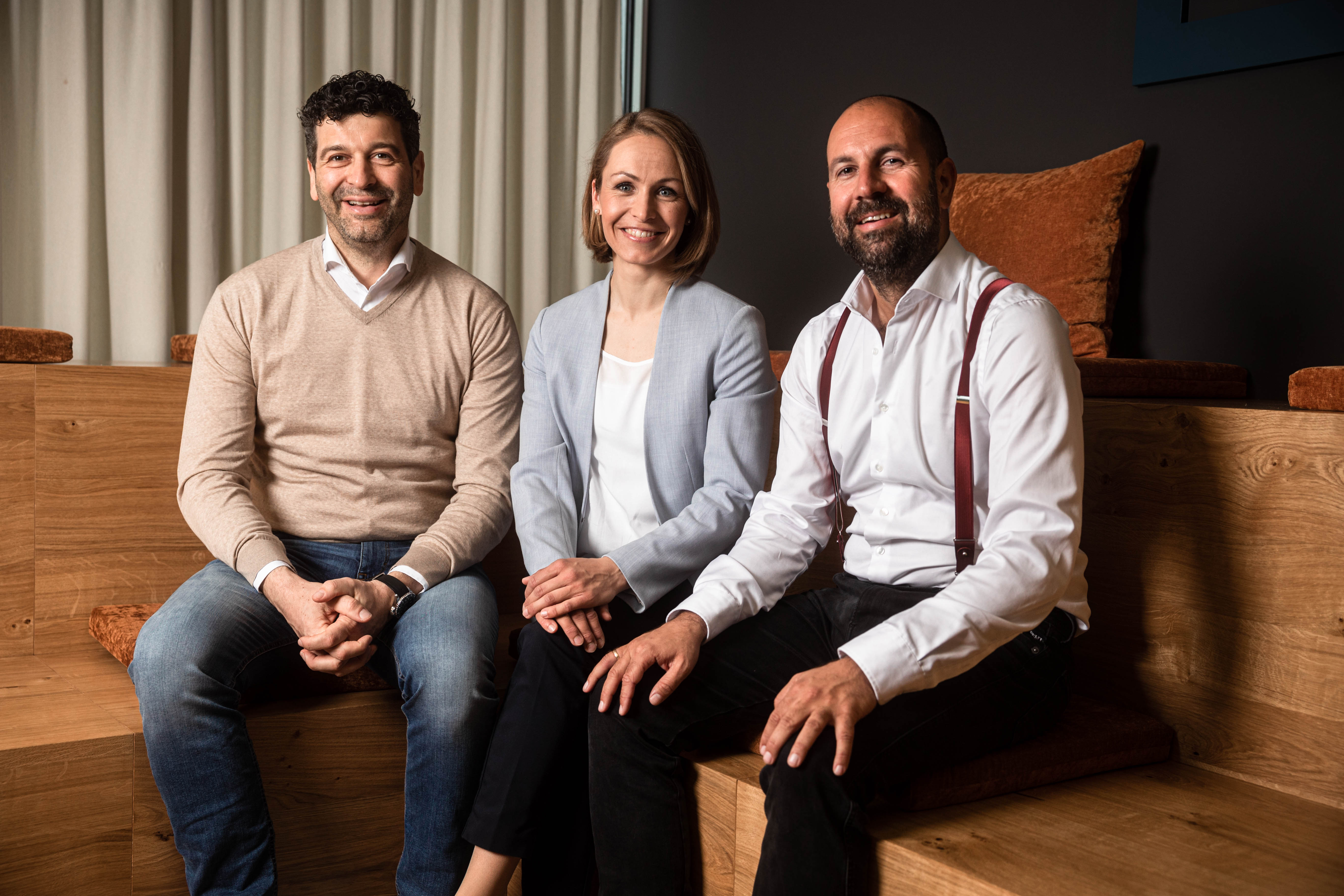
The Authors
Magdalena Neuner
Former biathlete, double Olympic champion & 12-time world champion
Christopher Spall
Managing Director of the Peak Performer Foundation & Managing Director of Spall. Brand Identity Consultants
Christian Grams
Initiator Peak Performer, Managing Director of the Peak Performer Foundation & CEO Munich Consulting Group
Life is there to be lived; it is simply fun to discover new things, and it is just incredible what you can experience if you know how to use your time correctly. Actually, curiosity is in all of us, but unfortunately, many people lose this appeal over the course of their lives.
We were outside a lot as children, constantly moving. Of course, we also want to get better and win. But our greatest drive, which keeps pushing us back into the ice track, is our joy of movement and our love for our sport.
Image source: Peak Performer Stiftung