From Marriage of Convenience to Strong Brand: Opportunities, Risks, and Rule-Breaking
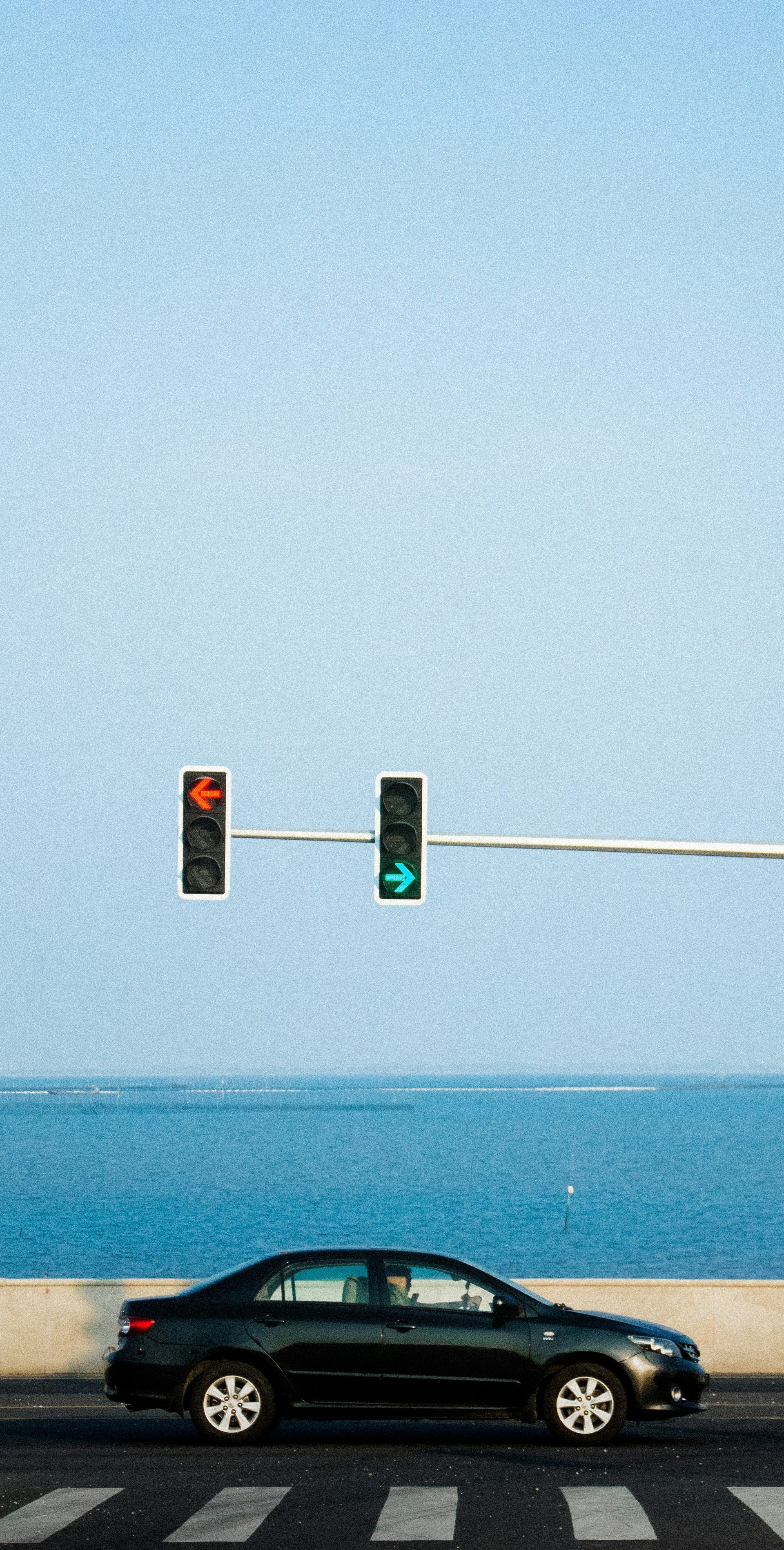
The launch of the "traffic light" coalition, the self-proclaimed "progress coalition," breaks many rules of previous political operations. This marriage of convenience aims to present itself as a strong alliance brand. How can this succeed, and which party might benefit? Christopher Spall gave an interview to DIE WELT on this topic.
Brands are made in everyday life.
Is the traffic light coalition just a marriage of convenience, or does it have what it takes to be an alliance brand? How can it succeed in conveying a common identity?
The three partners started as a "progress coalition." This is fundamentally attractive to many Germans who are plagued by dead zones and bureaucracy. People expect progress again, not petty squabbling. At the same time, however, progress does not work in four years. You won't be able to fix all the dead zones in Germany in that time. The alliance needs eight years to avoid failure. And to get a mandate for four more years, the coalition must deliver on promises: digitalization of the state, expansion of infrastructure, a consistent approach to climate protection. And all this in a situation where everyone is occupied with managing COVID-19. Progress despite COVID, that is the challenge.
Attractiveness is primarily created when rules and boundaries are clear.
Despite the difficult situation caused by COVID-19, how can the alliance become a strong brand and thus a successful coalition?
In a marriage between two partners, and just as much in a triangular relationship like the traffic light coalition, success depends on mutual trust. This requires a common identity that serves as a compass but also sets the framework for collective action. If this framework is not provided, the participants act as they please. It's like in football: if there were no sidelines, someone would take the ball and just run away. Attractiveness is primarily created when rules and boundaries are clear. People are used to German politics and the grand coalition where everyone has their own rules and defends their own identity. This is a decisive cause for political disenchantment in this country: looking good in front of one's own members. The traffic light coalition presents itself differently. The "progress coalition" started with an attitude of solidarity. That is a refreshingly new style.
How important will a common brand core be?
It is needed now because it sets the framework for the participants' behavior, so that someone from the Greens doesn't constantly break ranks and create their own program, then someone from the FDP, and so on. Otherwise, the common spirit dissolves again. That would be the first step toward failure for this so-called progress coalition. Can they completely prevent individual people from breaking ranks? No. But by establishing a common brand core, they can reduce the risk.
The true character of a brand always reveals itself in moments of truth. These can be crises, important decisions, or milestones.
So far, it all seems quite harmonious; hardly anything leaks out. This brings to mind values like trust, discretion, seriousness, and calm. Is this a good start?
This is promising, but people will look even more closely to see if this solidarity holds in everyday life when things get difficult, when the factual issues arise. When the Minister of Transport argues with the Green Minister for Economic Affairs and Climate Action, Robert Habeck, about how to deal with diesel drivers in the future. Or is that already happening? The true character of a brand always reveals itself in moments of truth. These can be crises, important decisions, or milestones. If this new style is perceptible in these moments, then a first step has been taken.
Whenever brands break their rules, they generate attention.
One can already sense a new wind in German politics.
The presentation of the coalition agreement symbolizes a new style and simultaneously a break with the conventions of German federal politics. This truly has never happened before. To have three partners standing there who actually behave like partners, who seemingly really see eye-to-eye. And it's not the lowest common denominator that governs. Whenever brands break their rules, they generate attention. This is an opportunity, and at the same time, an obligation. Because every mistake becomes visible under the spotlight. That is exactly the situation the traffic light coalition is in now. This style reminded me a little—don't be alarmed—of Donald Trump. But in a completely different way. (...)
Which party brand could benefit most from the alliance?
We are talking about the "progress coalition." The party most positioned for progress at the moment is the FDP. In 2016, I spoke with Marco Buschmann, the designated Federal Minister of Justice. It was about the repositioning of the FDP, which was kicked out of the Bundestag in 2013 and subsequently completely reinvented itself. They started a process, involved all 50,000 members in over 300 events, really started from scratch, and asked themselves: What is our contribution to a better Germany? In 2016, Buschmann was supposed to answer the question of what headline he would like to read about the FDP in five years—today—and he said: "The FDP brings a creative boost to the Bundestag." As early as 2016, the FDP had anchored the topics of digitalization and infrastructure expansion in its brand identity, which are all the topics now anchored in the coalition agreement.
Which of the parties has the furthest to fall?
Clearly the Greens. That is where the greatest risk lies. Because alongside digitalization, the second major project of the coalition is consistent climate protection. Should the measures not be implemented as hoped and, for example, a coal phase-out by 2030 fails, this will be blamed primarily on the party that occupies this topic. That means the danger of the greatest loss of reputation lies with the Greens. And the SPD? They now get to define their role between the two partners. They have two options: Do they want to be a moderator between a liberal course and an ecological-social one? One could get the impression during the coalition talks that Olaf Scholz acted more as a mediator there, almost in a Merkel-esque manner. Or does the SPD want to step forward and leave its own mark? Scholz must ask himself what his ambition is. To moderate like Merkel or to be transformative like Gerhard Schröder, who shaped the republic sustainably with Agenda 2010?
People want to deal with people, not with brands.
So which party benefits most from the alliance also depends on the individuals involved?
Absolutely. Christian Lindner sometimes behaves almost like a Federal Chancellor, very statesmanlike, perhaps beyond a healthy measure. He convinces through his polished rhetoric. Above all, however, he is obsessed with detail and competent in factual issues. Therefore, his personality tends to enhance reputation. Scholz's strength is not necessarily to put things in sharp focus. And Habeck and Annalena Baerbock didn't exactly convince through their personalities during the election campaign either. On the contrary. People want to deal with people, not with brands. That means we look at the acting persons and derive: Am I satisfied with the work? Can I identify with this person? We sometimes overestimate the power of a corporate or party brand. People want to see a face. These representatives decide the reputation of the whole. It will depend on the behavior of Lindner, Scholz, Habeck, and Baerbock to what extent the successes or failures of the coalition are attributed to their own party. (...)
At the presentation of the coalition agreement, the parties dispensed with their logos. Does that surprise you from a brand perspective?
The three partners are first and foremost committed to their party, even if they naturally claim to be committed to the country. But the party exists for its own core voters. The party only exists because of them. Out of this question of existence arises the obligation to this target group. It is therefore remarkable that all three partners dispensed with their own branding at the presentation of the coalition agreement. Visually, they appeared like an alliance brand. The alliance for freedom, justice, and sustainability. That was a sign of putting themselves at the service of the common cause and the country. I find that style-setting. An extremely clever move to gain an advance of trust for the coming four years. (...)
The SPD is the strongest party in the alliance and will provide the Chancellor. So they should have the ambition to benefit the most from the coalition?
I could imagine that the SPD will benefit under a moderate but never disruptive Olaf Scholz. He won't get carried away in interviews and have to backpedal. That is an enormous strength in politics. He doesn't cause offense and appears statesmanlike. If the SPD is smart, it will hand him the microphone as often as possible and keep Saskia Esken in the background. Scholz won't mess it up. He is clear without leaning too far out the window. The risk of not keeping their own promises is therefore lowest for the SPD. Speaking for the FDP, however, is that Lindner has the party under control and the party has a clear identity, so internal struggles there are almost impossible. This is precisely why I expect the most difficulty for the Greens in profiling themselves in this alliance. The hopeful start alone is not enough to form a truly strong alliance brand from the initial praise. Brands are made in everyday life.
Image sources: welt.de; ZUMA Press, Inc./Alamy Live News; Photo by Tang Zekun on Unsplash
The interview with Christopher Spall was conducted by Marcel Reich.
Image source: Foto von 汤 泽坤 auf Unsplash