From Politician to Strong Brand: An Interview with Wolfgang Bosbach
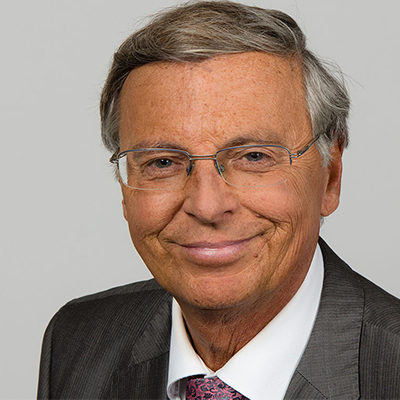
In this interview with the CDU politician, it becomes clear what constitutes a strong personal brand. The conversation provides valuable impulses for all those seeking growth – whether politically active or not – who want to do things better.
One personality has always stood out from the gray mass of politicians: Wolfgang Bosbach is considered one of Germany's most high-profile and popular politicians. He was born in 1952 in Bergisch Gladbach and joined the CDU in 1972. After secondary school, vocational training as a retail salesman, and a position as a supermarket manager, he obtained his Abitur through second-chance education and studied law at the University of Cologne, graduating with the 2nd State Examination. Since 1991, he has practiced as a lawyer at the law firm Winter Rechtsanwälte in Bergisch-Gladbach. From 1994 to 2013, he was continuously elected directly to the German Bundestag in the Rheinisch-Bergisch district, where he held numerous offices. In the 2017 federal election, he no longer stood for candidacy in his constituency.
People don't just want to see a fancy train. They also want to know in which direction it's traveling. Otherwise, they won't get on.
Mr. Bosbach, although you never held a ministerial post, you are regarded across party lines as one of the most prominent and popular German politicians. To what do you attribute this personal success?
To decades of political work in many different political offices. First at the local level, then for the last 23 years at the federal level. I was also deputy state chairman of the CDU North Rhine-Westphalia for some time. And in these nearly five decades, citizens have had the opportunity to form an image of the politician, but also of the person Wolfgang Bosbach. And the frequent media appearances have certainly contributed to the fact that over the years, even without a state office, I have become well-known.
Transparency
What is particularly important for a politician's public image? How do you 'get across' well?
Well, first of all, I hold the view—which may seem old-fashioned to some—that it is difficult to advise a politician on how to act and behave in public, because I am firmly convinced that people have an unerring instinct for whether someone is authentic or whether they are trying to play a certain role. The decisive factor is the combination of competence and language. Even after 46 years of political work, the rule for me remains every day: read, read, read – learn, learn, learn, meaning keep learning, and also bring the willingness to constantly educate oneself further. And perhaps also to correct oneself if one had wrong assessments in the past. This is how you acquire expertise. However, competence alone doesn't help you if you are unable to convey your political convictions in a language that people understand. Politicians often tend to lecture the audience instead of explaining why they take a certain stance.
Authenticity
How firmly definable and sustainable is one's own vision as a politician in a business characterized by deals and compromises?
Disillusionment sets in over the decades. There is that classic saying: "Politics is the drilling of thick boards." I would add: In the course of my political life, I had to work my way through entire forests. If you don't achieve your political goal, or don't achieve it immediately, then you should at least strive through a compromise to get a bit closer to the goal. Under no circumstances should you run in the opposite direction.
Credibility
Between 2012 and 2016, according to your Wikipedia entry, you were the German politician who participated in the most talk shows. How did you prepare for such political talks? Did you train for this, or is it just something inherent to you?
Perhaps the Good Lord already put the talent in my cradle to formulate a text so that people actually understand you. So that people know what is meant. I know many political colleagues who formulate things so complicatedly that you believe you are witnessing a revelation. But in the end, it is completely open as to which stance the politician is actually taking. [...] Preparation in the sense of learning a certain role, almost like an actor, to then present in a talk show, usually goes wrong. The preparation was always factual preparation, focusing on numbers, data, and facts, depending on the topic. And in a talk show, one strives to express clearly why one takes a certain political stance. Not just explaining that one is for or against it or what one intends to do, but also what the underlying motives are, what the factual arguments are, why one takes a certain stance.
Clarity
You are known as a politician of clear words and for that reason, were not always a comfortable deputy for your party chairmen. How does one master the balancing act between party loyalty and personal convictions in a position like yours when differences arise?
I am in the fortunate position of being able to say that I only represent positions of the CDU or those that used to be positions of the CDU. The only thing I could really be accused of is that I am not able to change my opinion quickly enough. Whenever controversial debates arose, in questions of Euro or refugee policy, I could always say: that used to be the CDU's stance on these issues. For the following reasons, I still consider it correct. Angela Merkel actually always accepted that, even if we didn't agree on these points. And – I think she knows this too – I never lied to her. I never cheated her. I never made a secret of my opinion. I never voted differently in secret than I did in public. She could rely on me. So with me, she always knew where she stood [laughs]. That I was considered a 'care case' there, yes, I believe that immediately [laughs], or a 'problem case' or a 'maverick', as Spiegel wrote. I believe that immediately. But Angela Merkel would never say that he went behind our backs.
Reliability
Is a "clear edge" (clear stance) trainable or is it innate?
I believe that's where politics meets personality. I couldn't sleep well if I couldn't express myself clearly. And the thousands of pieces of correspondence that I still have today with citizens, I couldn't conduct them at all if I weren't sure of my stance. Not "sure" in the sense of infallible, nor "sure" in the sense of "Only my opinion is the one I allow to count," but "sure" in the sense that I have truly formed a well-founded opinion after a thorough weighing process, which I represent out of conviction, not by chance.
Stance
Mr. Bosbach, thank you very much for this very interesting conversation.
The interview with Wolfgang Bosbach was conducted by Prof. Holger J. Schmidt.
Strong Personal Brand: What Matters?
Identity Development as the Key
A strong personal brand is the distilled expression of what makes a person unmistakable. Developing one's own unique identity makes this distinctiveness tangible. Only when we know our own identity can we carry it outward and explain it to others.
Our process for personal identity development is based on a unique alignment of self-image and external perception. This prevents us from building the identity as a wishful image. Strong personal brands are based on a strong external perception. This makes them sustainably credible and perceived as authentic.
The Benefit of Strong Personal Brands
A profile sharpened in this way leads to more self-confident appearances, more focused actions, and, as a consequence, greater success. A strong personal brand develops from its inner compass. It does not imitate but unfolds its own uniqueness and has a role-model character.
Identity development reveals one's inner drive and makes visible where I can make a difference. And it provides an answer to the question of what I want to achieve and leave behind in life.
Strong personal brands always convey transparency, authenticity, credibility, clarity, reliability, and stance. Discovering and developing one's own identity and thus becoming a personal brand is valuable for everyone who can and wants to make a difference with their personality – whether a politician, consultant, salesperson, or entrepreneur.
The development of one's own unmistakable identity into a clear profile is the key for all development seekers who want to do things better.
The detailed interview with Wolfgang Bosbach can be found in the book "Personal Branding - What Makes People Strong Brands" by Christopher Spall and Prof. Holger J. Schmidt.
Image source: Sven Teschke/WikiMedia Commons