The 5 Unmistakable Brand Lessons of 2024
From a brand perspective, what remains from this year?
In 2024, we worked on the brand identity of 18 organizations—primarily medium-sized companies—and one federal state. A real highlight was a premiere: for the first time, we rolled out a developed brand identity simultaneously on three continents. With a connecting, simultaneous event in the USA, Japan, and Germany, it became tangible how a shared identity can unite people across thousands of miles.
But it's not just organizations that can become strong brands. That's why we also supported 25 individuals in crystallizing their identity. From top lawyers to winemakers, from CEOs to those seeking personal development. Time and again, we experienced how identity provides people with stability, orientation, and self-confidence in every life situation.
Those who know us know: we want to enable as much development as possible. That's why we shared our experiences with over 500 listeners in 6 inspiring lectures.
But that wasn't all. Our media reach this year increased our footprint immensely: a million-strong audience on ProSieben and Kabel Eins saw our perspectives on the topic of branding. A further 8 interviews with our assessments were published in leading business media (including Handelsblatt).
Ultimately, a brand is always based on top performance achieved. Exactly this will to achieve something as a society and as an individual is essential for our future. That's why our commitment to the Peak Performer Foundation is particularly close to our hearts. We are especially proud to have taught 400 children the core values for achieving peak performance with purpose and joy this year.
We don't know today what the coming year will bring. Only one thing is clear: we will once again provide people and organizations with their identity as a compass, a source of meaning, and a positioning aid by searching for the unmistakable and empowering people to use it.
Our Unmistakable Brand Lessons 2024
1. "Made in Germany" is no longer copy protection: Why German engineering is no longer the decisive factor in the automotive market
An electric ID.4 from Volkswagen is stuck in traffic on a dilapidated autobahn – yet again. Because the endless construction work at the edge of the road seems to make hardly any progress. The end of the traffic jam is not in sight. Discontent spreads throughout the vehicle. On top of that, the battery is almost empty. Will the car even make it out of the jam before it's empty?
This everyday situation describes the perceived state of the German economy quite accurately. VW is just one prominent example of this. Audi is appearing in China without its iconic four rings. A sign of dwindling faith in the value of "Made in Germany" in the changed automotive market. The top performances of the German auto industry shaped its strong international reputation for decades. They are clearly losing relevance now that engines have become electric. The new factors deciding purchases are not shaped in Germany. The leading electronics in the interior and the electrics of the drive are made in China and made by Tesla. Tesla and the competition from the Far East are not just on eye level with German carmakers – in areas like software, for example, they are already ahead.
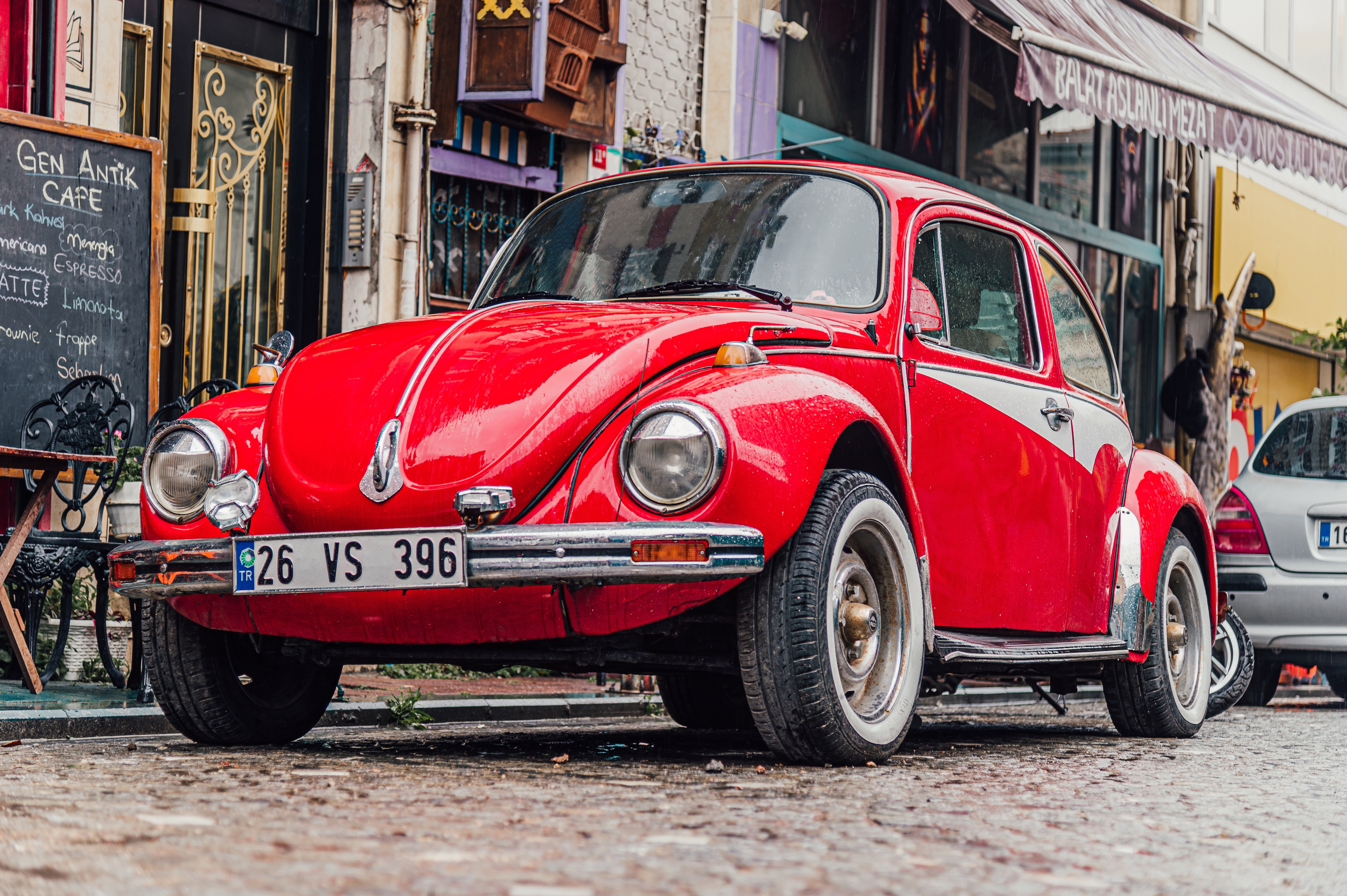
Are we capable of recharging the electric brand motor? In a conversation with former VW board member Herbert Diess a few days ago, I asked him whether we can still manage the comeback without losing jobs on a grand scale. He was skeptical and said we had meanwhile lost touch in 2-3 fields. Catching up now would be more difficult than it was 12-18 months ago. But what if we could remobilize the will to perform from the founding years? Would it be possible then? Diess smiled. And I believe that we can succeed in preserving the value of the "Made in Germany" brand.
What do we learn from this?
What we need in Germany, first and foremost, is a new culture of performance. With the will to perform in all areas of society, not letting others take the bread from our table (= prosperity). A courageous feat. This requires political framework conditions that reward performance. And speed in change. Every entrepreneur is a role model, for better or worse. Every employee can ask themselves how much they want to contribute to society. That is how we can maintain the strength of our German brands - and secure prosperity.
PS: Based on experiences this year, we certainly don't recommend the train to avoid the traffic jam...
2. Clear positioning creates radiance even for destinations: How the City of Love wins gold with the Olympic Games
What incredible images from Paris. Many of us sat spellbound in front of the screen. We were impressed by the opening ceremony on the Seine, the beach volleyball at the Eiffel Tower, and by Tom Cruise rappelling from the roof of the Olympic Stadium during the closing ceremony.
Emmanuel Macron made an investment in the destination brand Paris and the nation brand France. And chances are good that every euro was worth it.
What did the French do right?
They celebrated the identity of France. The love of art. The history of freedom. The lightness of being. The sense of aesthetics. No one thinks anymore about the mass protests with burning cars and high crime in the outskirts of the city, the so-called banlieues.
They strengthened Paris's positioning as the City of Love. Not least with the fighter jets that painted red heart-shaped contrails in the sky during the opening ceremony.
The abundance of symbols rich in identification was striking: whether the Marseillaise, the Tricolore, the Olympic flame as a hot air balloon, or the new bell of Notre Dame in the athletics stadium - many expressive landmarks were impressively staged by the organizers.
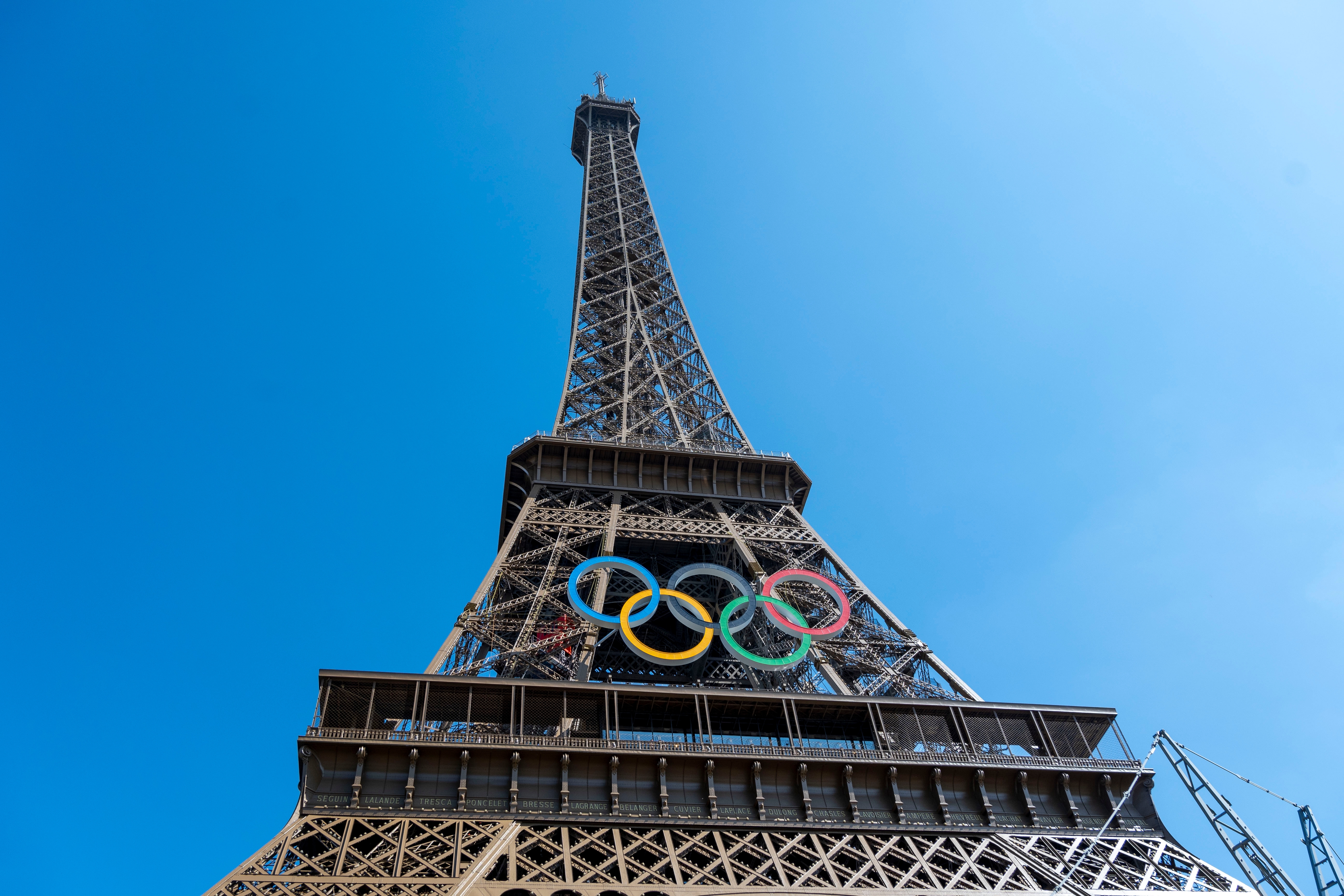
The result is a significantly increased attractiveness of Paris as a tourism destination - with effects on restaurant bills and overnight prices (even if the surcharges are not as large as during the games, when hotel rooms cost up to 500% more). Nevertheless, the pull effect of the perfect staging will encourage many people to visit Paris.
What do we learn from this?
The world city with the clearest profile appeals to every brand: know your symbols. Use your history. Show your identity. Invest in identification. Because identification and attraction beat awareness.
3. Unmistakable is more important than perfect: Why star chef Tim Raue renounces his third star
Tim Raue is one of Germany's most famous chefs. With his restaurant "Tim Raue" in Berlin, which holds two Michelin stars and reached number 26 on the World's 50 Best Restaurants list, he sets global standards. His Asian-inspired dishes with French influence represent innovation and uncompromising meticulously. Furthermore, the polarizing chef is a welcome guest on talk shows and has several TV formats in which, by his own account, he only does what brings him joy, namely "gorging, boozing, and traveling." (NRD)
But what is behind this success? Raue grew up in simple circumstances in Berlin-Kreuzberg. Shaped by poverty and violence, he developed a strong drive early on: he wanted to get off the street and be socially accepted. This hunger for change drove him to top performance. And with hard work and determination, he fought his way to the top of the gastronomic world.
But once there, it quickly became clear to him that external success is not enough to be satisfied in the long term. Suit and tie do not correspond to his identity, and material motivation has a short expiration date. He found out that real success means staying true to oneself and consciously shaping one's own life. If you hear him talking about food today, it becomes immediately clear: the man loves his job. He lives out his passion as a chef and host and realizes himself in every detail of his work.
The motto of his restaurant "He who wants what he must, is free" is an essence of his philosophy. This freedom is also reflected in his remarkable decision to renounce a third Michelin star. Not because he couldn't achieve it, but because the hunt for the third star would put him in shackles. In a conversation with Gault Millau, he found out that the restaurant guide is currently looking for a very specific style. A trend that does not fit Tim Raue's philosophy. To achieve this third star, he would have had to adapt, to change his style.
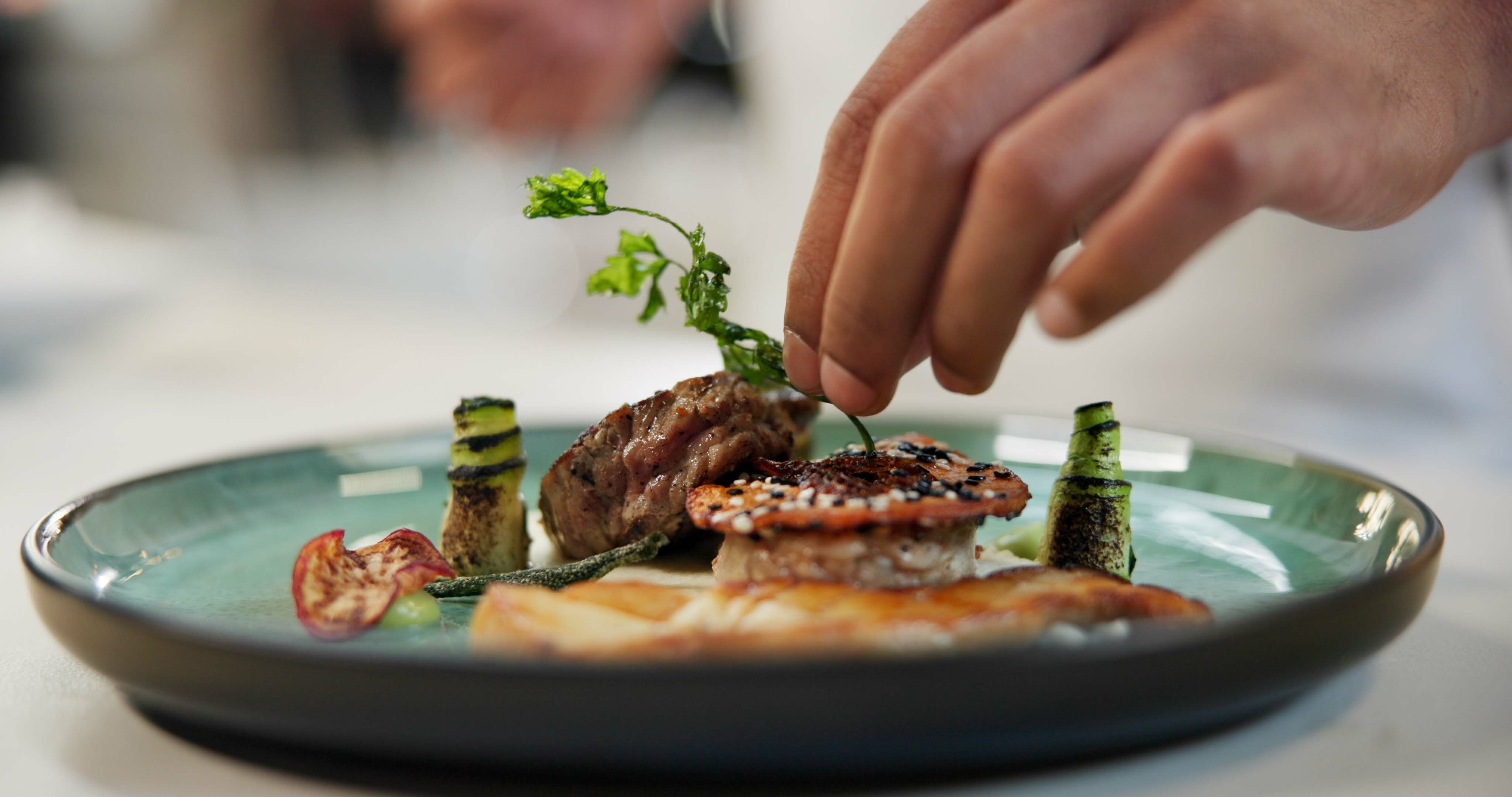
In an industry shaped by perfectionism and pressure, this attitude is remarkable. The tragic case of top French chef Bernard Loiseau, who took his own life after a downgrade, shows how destructive the focus on external recognition can be. Tim Raue, on the other hand, has found a way to detach himself from such external standards and stay true to his unique signature.
Another key to his success is his ability to focus on the essentials with extraordinary clarity. He consistently says "no" to everything that could distract him. For Tim Raue, only what moves him forward personally and professionally counts. This uncompromising focus allows him to invest his energy fully into his vision and work.
What do we learn from this?
Tim Raue shows us that true success comes from within. His example teaches that perfectionism should not be the goal, but rather leaving a distinct signature. His life philosophy is an invitation to reflect on our own priorities: What drives us? Which things deserve our energy? What does our signature look like in our work?
When we know our inner drive and concentrate on what really matters, success becomes more than just a collection of awards.
4. Good intentions are worthless without a shared identity: Why brand alliances like the coalition government fail
Political parties do everything they can before elections to highlight their differences. They emphasize how they differ from their competitors and why they have the better solutions for the future. Of course, a strong brand clearly differentiates itself from the competition through its values and specific benefits. Ideally, it becomes highly relevant to its own target group. A sharp party profile allows voters to identify and simplifies the voting decision. But the alliance lives on a shared identity, on individuality within the commonality. What sounds complex, is complex.
In the case of the outgoing coalition government, unfortunately, the whole did not become more than the sum of its parts. SPD, Greens, and FDP did not manage to reconcile their values and principles as alliance partners. What began as the promise of a forward-looking government turned out in practice to be a difficult balancing act, in which some coalition partners had to painfully contort themselves.
In brand alliances, the fit decides the success. Just ask in Stuttgart about the learnings from the Daimler-Chrysler failure. And in Leverkusen, whether anyone would naively evaluate the reputation of a pesticide manufacturer again. The fit of identity and beliefs is more important than any logic. It holds even in times of crisis. When goals must be adjusted. Dreams shatter. The German federal government also experienced this with the war of aggression against Ukraine. Priorities were scrambled, plans crumpled up.
What do we learn from this?
First: brand alliances need a shared identity. Because in a storm, only this shared identity provides the necessary stability. This shared identity is the most underestimated factor in merger and acquisition processes.
And second: brand alliances are also made not by good intentions, but in daily life.
5. Top performance is the basis for long-term brand success: How niche star Stanley became the top dog
The pressure on traditional brands seems greater today than ever. Trend brands from all over the world build awareness and popularity within a very short time through social media. At the same time, because of the uncertain economic situation, the wallet isn't exactly loose for many – both on the consumer side and on the corporate side. Some cult brands with long histories, such as Esprit (fashion) or Vittel (water), are disappearing completely from the market as a result. Others, e.g., Steiff (stuffed animals) or Bauknecht (household appliances), are struggling hard.
Yet others manage to remain successful for centuries through clever strategic decisions and skillful brand management.
A completely burned-out car is visible. The occupants were able to save themselves and are unharmed, but otherwise nothing seems spared by the fire. Then the eye falls on a thermal mug. Not only is the mug intact, but the cold drink inside is at the perfect temperature. When shaking the mug, one notices: even the ice cubes didn't melt from the fire. What sounds like it's from a marketing script actually happened.
Stanley, founded in 1913 and known for its indestructible vacuum flasks, has stood for reliability and durability for decades. For a long time, however, Stanley was a niche brand for workers and outdoor enthusiasts. Through targeted rebranding measures and clever use of social media, the brand catapulted itself into the mainstream and won over Millennials and Gen Z particularly as a new target group. The story of the unharmed thermal mug at the end of 2023 came at exactly the perfect time and impressively underlined the quality of the products. The video was viewed over 20 million times. The brand skillfully utilized this hype to strengthen its positioning and set itself apart from competitors.
What do we learn from this?
What brands need is the combination of top performance and a gripping story. Because without performance, there is no brand. The story of the Stanley Cup in the burned-out car is a prime example of how storytelling can deepen the emotional connection to a brand. This story is more than just a viral moment – it becomes a symbol for the brand values: robustness, reliability, and consistency.
A well-told narrative that highlights the quality of the products can act like a catalyst. But it remains crucial that the story is authentic and based on strong performance. Even the best story loses its effect if it is not credible. The combination of top performance, compelling storytelling, and clever communication allows brands not just to survive crises, but can also bring them back to life.
The strongest brand lies within yourself.
That's why our conclusion for 2024 remains the same as for 2023:
*Develop* identity. *Feel* attractiveness.
Image source: Image by Danilo Carta from Pixabay; Shutterstock Stock-Fotos ID 2461600727, 2488749195, 2488467247