Insight into the FDP Engine Room
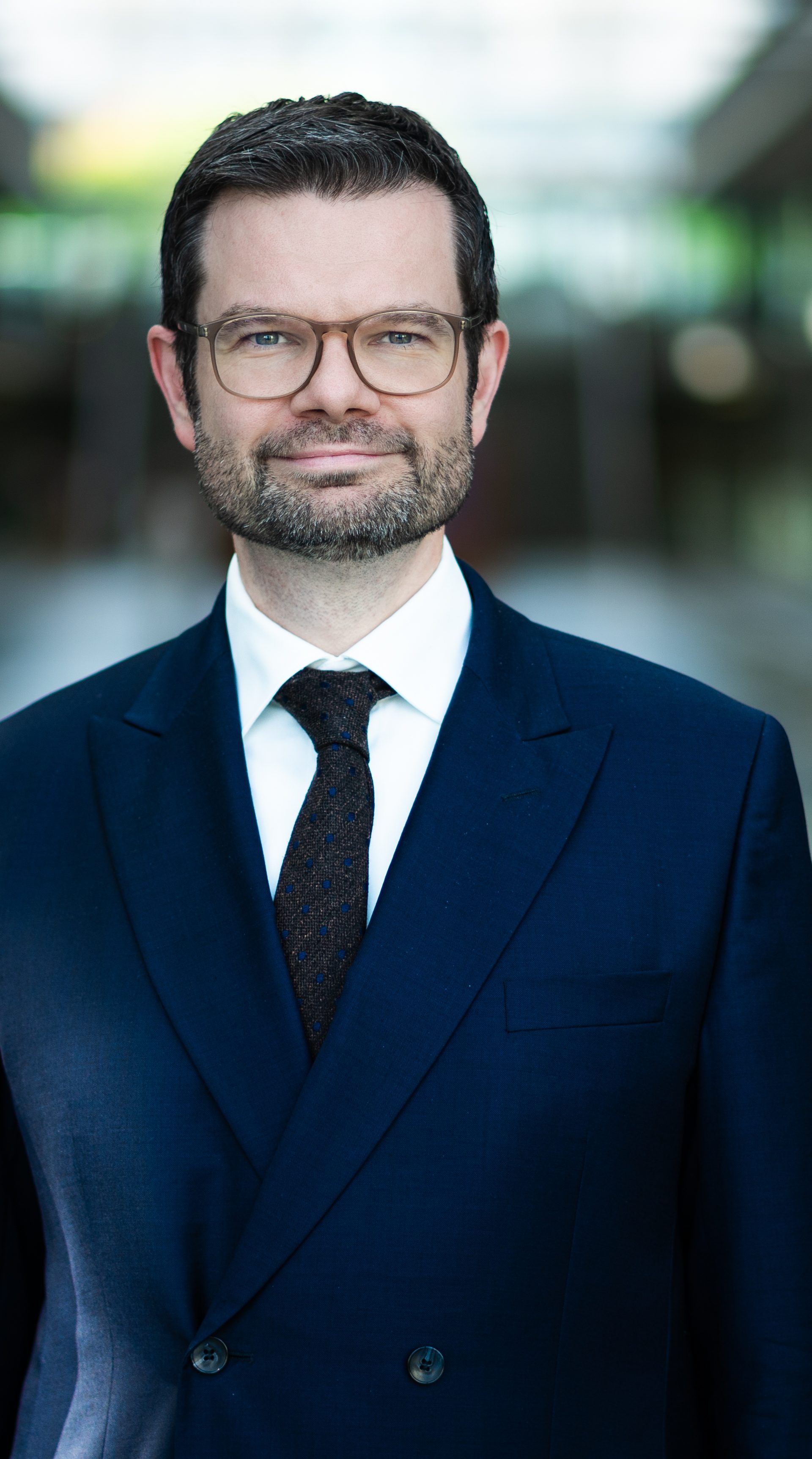
In a 2016 conversation, Marco Buschmann gave us an exclusive look into the creation of the FDP's new brand identity. In the interview, he explained what headline he would wish for the FDP in five years. Has his wish from back then come true?
You always have to ask yourself what your own contribution to others is.
What does the FDP's mission statement look like in concrete terms?
First and foremost, we addressed the question of why voters temporarily dismissed us in 2013. It became clear to us that many people could no longer recognize what the unique contribution of the FDP was. We believe the special thing about the FDP brand is that we are an optimistic party that believes in the individual and wants to empower them. We want to offer a framework that enables the individual to play to their strengths, thereby creating a social order that is better for everyone overall.
If you were to break it down into a single sentence: What does the FDP brand want to stand for from now on?
More opportunities through more freedom.
We started with ourselves and asked the question what we did and, above all, what we can do better.
What were the decisive success factors in the development of the mission statement?
It was essential that we did not start looking for the blame for our failure in the behavior of voters, other parties, or the media. We started with ourselves and asked the question what we did and, above all, what we can do better. Additionally, we found the courage not to hoard privileged knowledge. We shared all the insights we gained through open and honest analysis with our members. This took place in over 300 nationwide events in which we presented many of the results and made them tangible. And afterwards, of course, we discussed them openly and honestly. In this way, our members were able to directly influence the consequences drawn from the analysis.
We started an open, dialogic process and tried to get all members on board.
The FDP has more than 50,000 members. How do you manage to get 50,000 people looking and moving in the same direction?
We didn't just say: This is the direction everyone has to follow. We started an open, dialogic process and tried to get all members on board. As already mentioned, we held nationwide events on the mission statement process and trained over 80 mission statement ambassadors. Their task was not to talk the members into something, but to share their knowledge with people, explain, listen, and give us feedback.
What was the result of member participation on the way to the new shared brand identity?
Members could see that we picked up many of their suggestions. In total, we received feedback from over 15,000 members via email, SMS, or letter, from young to old. There were even older gentlemen who had the draft mission statement printed out by their grandchildren, wrote down suggestions for changes with a typewriter or felt-tip pen, and sent them to us by fax. This approach led to a high degree of motivation and acceptance for the change."
And how do you ensure that your newly developed brand identity does not lose relevance once everyday life returns?
There are already many debates taking place about whether a certain course of action is in line with the mission statement or not. In our executive committee, too, the mission statement is repeatedly used to discuss questions of tone. I don't have the impression that it's just hanging on the wall being ignored. But, of course, to prevent potential danger, we have also taken precautions. Especially with a view to upcoming election campaigns.
Is what we are planning to do really an expression of what we want to be?
How exactly can we imagine that?
In the past, campaigns were developed more or less completely decentrally by the individual state associations of the FDP. Now we develop the campaigns together. State associations and the federal association. This very close exchange gives us the opportunity to repeatedly ask ourselves: Is what we are planning to do really an expression of what we want to be? So far, this path has worked well. In the elections in Rhineland-Palatinate, Saxony-Anhalt, and Baden-Württemberg next spring, you will see that we have developed independent lines that all live the common spirit of the mission statement.
Based on your experience, would you agree with the statement that a brand must be managed centrally from a single source?
Centrality always sounds a bit like command and obedience. We don't have that option as a political party. We can only convince our members. If you listen to each other and exchange ideas, in the end, more commonalities emerge. We have agreed on a common identity that is accepted by everyone.
What topics are you currently working on to successively regain credibility and trust in your party?
(...) Education is a very decisive factor for the future, and incidentally also for managing the integration issue. Modern infrastructure will also become important, i.e., more than just roads. The infrastructure of the future has a lot to do with broadband. And here we are on the threshold of being a developing country. Another immensely important question is what will become of Germany as an industrial location. There are now sectors where investment is lower than depreciation. That should give us pause, as these industries are highly relevant for the middle class in our country. Unfortunately, it is precisely these topics that get lost in crisis mode and are therefore particularly close to our hearts. These are the ones we want to take care of.
The world seems to be getting more and more fragile. In contrast, pure optimism for the future and opportunities stand at the core of the FDP brand. How does that fit together?
First of all, I would like to disagree with you. You are describing a feeling that is reinforced by the way politics and communication are conducted in our country. The feeling of permanent crisis. To put it bluntly: the world seems to be going down the drain. The only thing we can still do is slow down the rate of decline. This naturally leads to conservatism, to fears, to a desire for security. When we look at the world as a whole, this picture is of course not true. From poverty reports, we know that we are making insane progress in the worldwide fight against poverty. In today's technological developments, we see that people in Africa who could not afford a ticket to the USA in their entire lives can now watch lectures at Harvard or Stanford on their smartphones. There is fantastic progress in civilization and humanity. This is also part of the completeness of the picture. (...)
How do you ensure that the leading figures at the state and federal level also embody your shared identity?
The keyword "leading by example" is the decisive factor. As a political party, we do not have authoritarian instruments as is the case in a commercial enterprise. Therefore, our main instrument is leading by example. And we must be able to show the success of the path taken. That is why the election successes in Hamburg and Bremen were so important.
What is our unique and important contribution to making the country more successful?
What one piece of advice can you give to brand managers who are also trying to lead an organization out of a crisis of credibility?
Essentially the following two pieces of advice: First, ask yourselves what you can do and don't complain about external factors. And second, you must repeatedly ask yourself what your own contribution is. And not for self-preservation, but the contribution to others. Every organization needs a comparable guiding question that leads away from "What can we do so that we still exist in 5 years" towards the question "What is our irreplaceable contribution to society". For us, it was the question of what our contribution to this country, to the political debate and culture in Germany is. What is our unique and important contribution to making the country more successful?
What headline would you like to read about the FDP in Der Spiegel in five years?
The best thing would be if you could read: "Free Democrats provide creative boost in the Bundestag."
First published January 20, 2016
Image sources: Free Democrats (FDP), derwesten.de
The interview with Marco Buschmann was conducted by Christopher Spall.
Image source: https://www.fdp.de/person/marco-buschmann